
Researchers at ETH Zurich and the Swiss Federal Institute of Aquatic Science and Technology (EAWAG, in German, Eidgenössische Anstalt für Wasserversorgung, Abwasserreinigung und Gewässerschutz) have established, in an interdisciplinary study, that microorganisms biodegrade biodegradable plastics.
This creates completely new opportunities for sorting waste and managing waste plastics in the future as society becomes more aware that it is possible to use biodegradable plastics in areas where it makes sense or where there is a risk that plastic ends up in nature, such as with use for agriculture. The researchers have shown that the soil microorganisms utilize metabolic carbon in PBAT (polybutylene adipate terephthalate) polymers made from compostable and biodegradable plastic to produce energy.
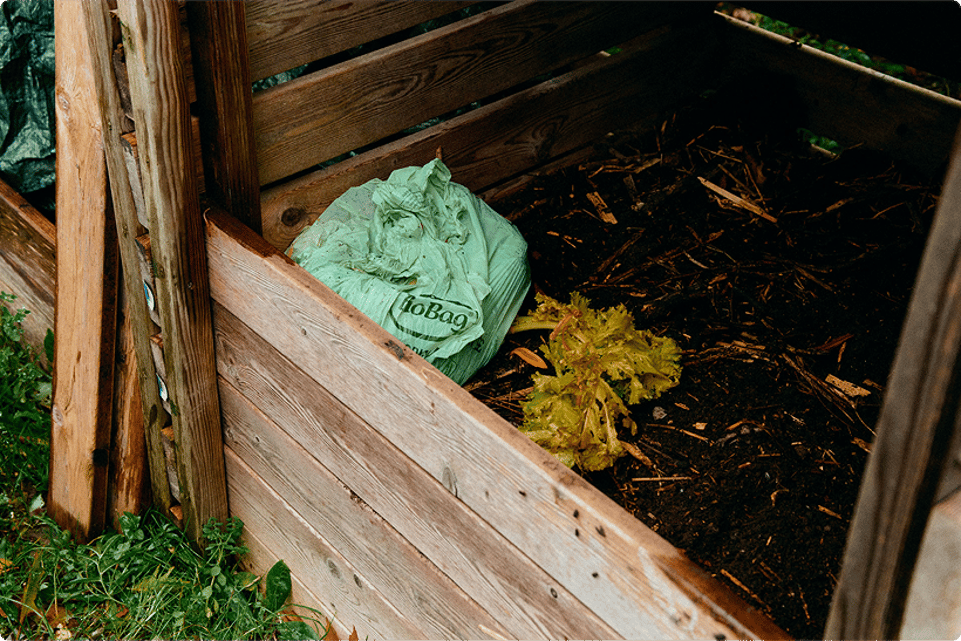
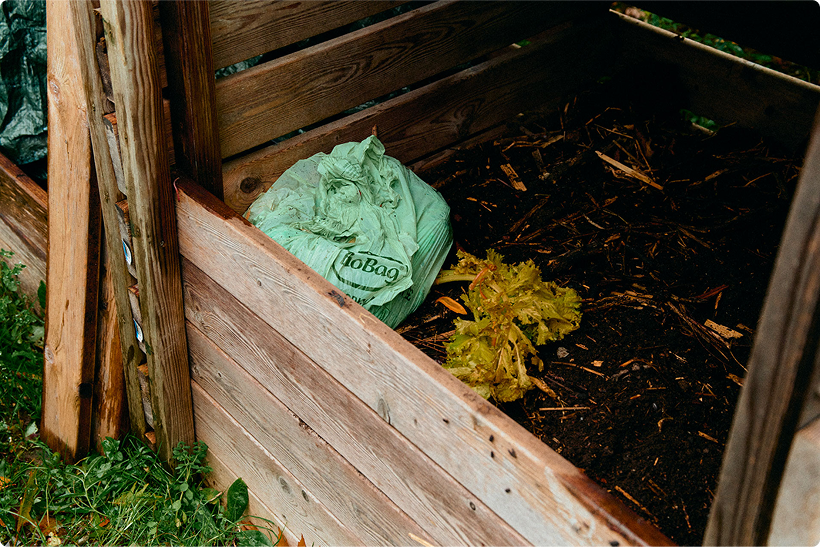
One by-product of this process is microbiological biomass, which is part of the cycle of nature. The length of time biodegradable plastic takes to completely compost depends on various factors. Composting involves microbes in the soil digesting organic matter and converting it into carbon dioxide (CO2), water and biomass. Microbes require moisture, oxygen and a sufficient temperature for the composting process. Composting will be slower in cold weather, but if leaves from trees are composted in these lower tempratures, biodegradable bio-bags will also compost. Microbial activity is lower in dry or poor soil than in nutrient-rich soil.
How the study was conducted
The research team used the biodegradable polymer PBAT, which they labelled with a carbon isotope. This isotope labelling allowed the researchers to trace the polymer-derived carbon in various biodegradable pathways in the soil. It turned out that the carbon from PBAT had not only become carbon dioxide (CO2) as a result of microbial respiration but had also been transformed into biomass by the microorganisms.
Biodegradable bioplastic decomposes
It has been scientifically proven that biodegradable bioplastic actually decomposes. The researchers are the first to show where the carbon from a polymer ends up and that the plastic material is fully biodegradable in the soil. "It shows that there are no residues after the biodegradation other than water, CO2 and biomass," says Hasso von Pogrell, Managing Director of European Bioplastics e.V. "This study contradicts two concerns that are often raised in relation to biodegradable bioplastics: 1) The doubts that microorganisms fully metabolize certified degradable plastics and 2) the concern that the oil-based part of the polymer is not completely degraded,” explains von Pogrell.
Opportunities to sort biodegradable waste
"The result of this study will undoubtedly enable municipalities and the waste industry across the EU to recognize the benefit and functionality of bio-waste bags of certified compostable bioplastics in organic waste collection. In agriculture, certified biodegradable bioplastic is now a safe alternative to conventional mulching of fields,” von Pogrell concludes. The detailed results of the study can be found on ETH Zurich’s website, under the section "News & Events" (www.ethz.ch/de).