The process of manufacture, consumption and recycling is disrupted when plastics are mislabeled or misleadingly labeled to provide a sense of being eco-friendly when the item (or its packaging) is not in fact sympathetic towards the ongoing well-being of the earth.
The term ‘OXO-biodegradable’ doesn’t exactly trip off the tongue. However, despite being a mouthful, the concept of OXO-bio plastics has generated much debate as to whether their use is a solution to plastic litter, especially that caused by plastic bags, in the environment. OXO-bio plastics degrade in the presence of oxygen and the process is accelerated by UV light and heat. They will not degrade immediately in the open as they are stabilised to give the product a useful service life (approximately 18 months for a plastic bag for example). If exposed to the environment as litter they will biodegrade faster than natural waste (such as twigs and leaves) and much more quickly than ordinary plastic. Many countries in the Middle-East, Asia and Africa have made their use mandatory. However, are OXO-biodegradable products the perfect solution towards creating a greener planet?
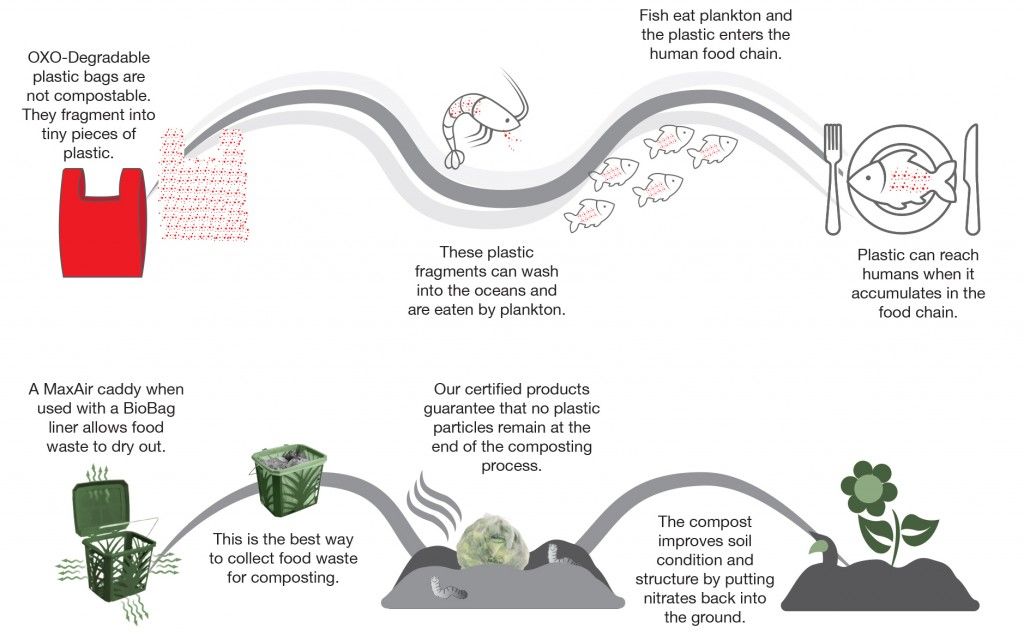
The same chemicals which help these plastics fragment and disappear from the naked eye are as disruptive to natural processes of degrading as typical plastic litter, but don’t break down during the recycling process. Not only could these products contribute to excess litter, but they also disrupt the recycling of ordinary plastics.
Biodegradable versus Fragmentation
A major problem with plastics is the lack of proper labeling to distinguish between products that are in fact compostable and biodegradable and those which only break down into fragments. Certified compostable and biodegradable products return to soil as they break down over the course of a few years. Fragmentational products reduce to a point of not being visible, but remain as plastic products in landfill at best or in our forests at worst. It’s an important distinction for eco-friendly people who want to minimize their footprint in their personal and business lives. At some point, everybody will use a non-biodegradable plastic product but it’s nice to know which items or harmful to the environment and keep their use to a minimum and use fully compostable and biodegradable products when available.
Littering
One of the most problematic aspects of mislabeling the biodegradable properties of various plastics is the fact that it can potentially promote littering and contribute to landfill. Waste is produced in every home and business, but the goal is to keep it to a minimum and ensure it is properly disposed of. Products which are mislabeled as biodegradable don’t go to the proper area for disposal and disrupt the process of recycling for the items that were properly made for the sake of being environmentally friendly.
OXO-biodegradable products are not a clean, environmental or sustainable solution towards creating a greener Earth. In spite of the claims made, they break down into tiny fragments of litter, impossible to eradicate, rather than breaking down fully into organics. The use of biodegradable certified compostable bio liners and bags is the only true alternative to OXO-biodegradable bags.