ArticleComposting & Soil HealthEnvironment & ClimateMunicipalities & Public ProgrammesEveryone & Everywhere

Plastic pollution in agricultural soils

Written by The Biobag Team
biobag
Stay Inspired, Stay Connected!

Join the Biobag community and get practical tips, real stories, and updates on how compostable choices are making a difference in homes, cities, and businesses.

Get in touch
Biobag avoid microplastics

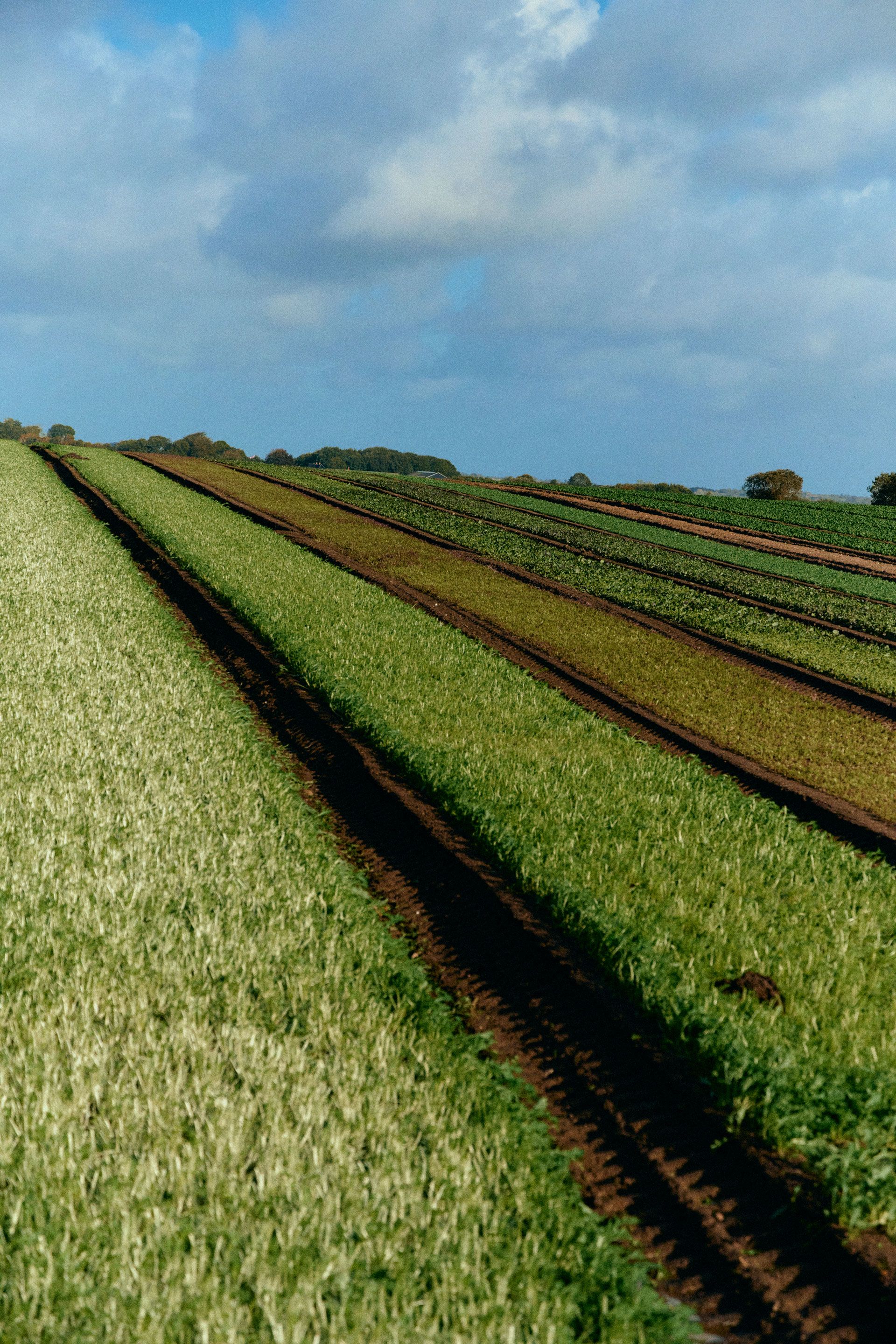
When we talk about plastic pollution, most people think of oceans, floating waste islands and wildlife affected by plastic debris. However, plastic pollution is also found far from the coastline, including in the soils where our food is produced.

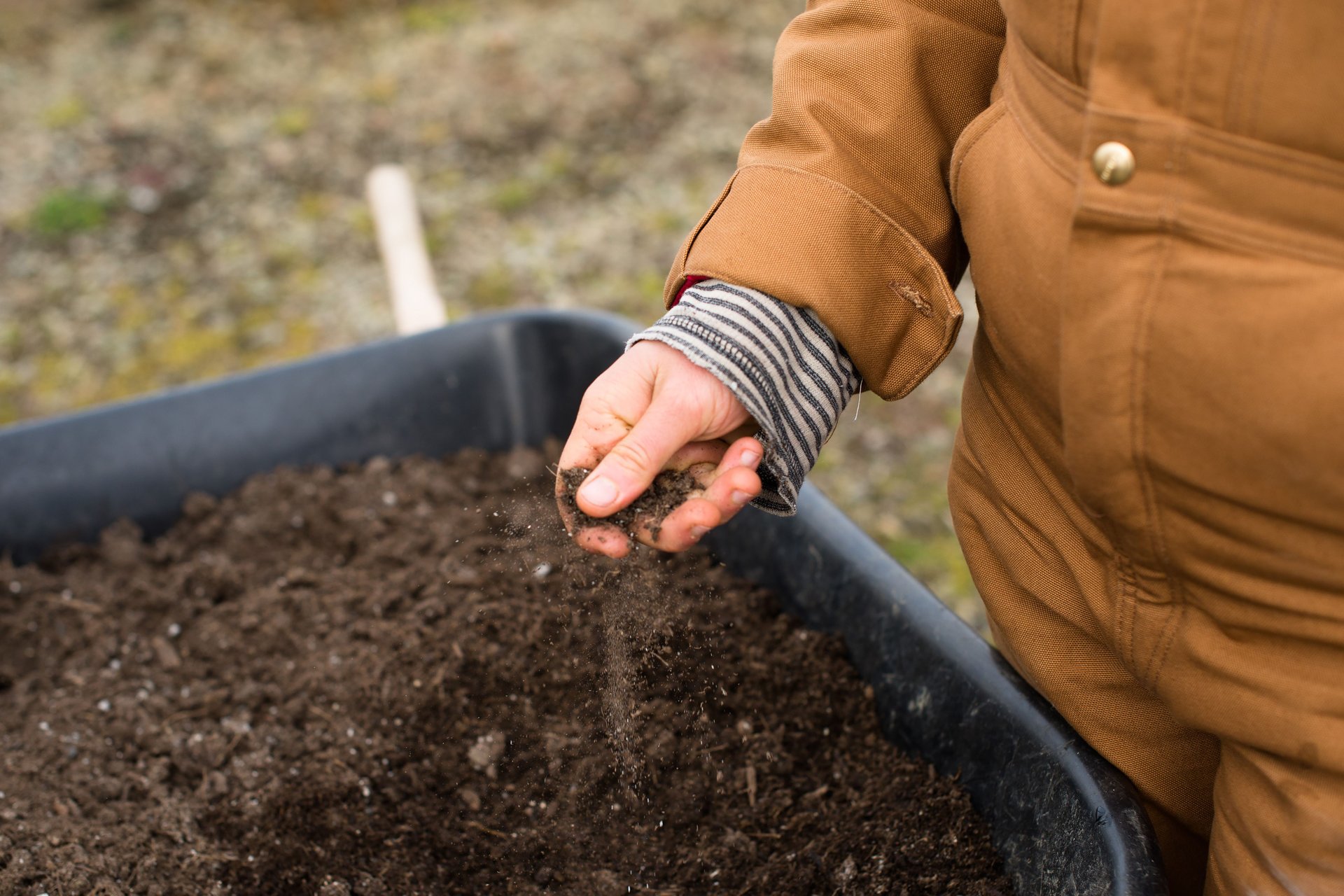
Research increasingly identifies agricultural land as a reservoir for microplastics. Plastic pollution in soil is difficult to detect and extremely difficult to remove once particles become mixed with soil, organic matter, plant roots and microorganisms.

An invisible but growing problem

Agriculture is among the sectors that use the largest amounts of plastic globally. According to the FAO, agricultural value chains used approximately 12.5 million tonnes of plastic products in plant and animal production in 2019. These included greenhouse and mulching films, irrigation systems, silage films and other production-related applications. A further 37.3 million tonnes were used in food packaging.

A 2023 international analysis estimated that the upper metre of agricultural soils worldwide could contain between 1.5 and 6.6 million tonnes of microplastics originating from wastewater and plastic-mulching inputs. The authors emphasised that this is a modelled estimate and that considerable uncertainties remain.

Microplastics are rarely visible. Over time, larger plastic items do not necessarily biodegrade but instead fragment into increasingly smaller particles that become mixed into the soil. In this way, plastic becomes part of a complex environment consisting of soil particles, organic matter, plant roots, and microorganisms.

FAO’s 2025 research review found evidence that plastic pollution can affect soil structure, water movement, nutrient cycling and microbiological processes. Effects on plant growth have also been observed in some studies. However, the results vary according to factors such as the type, size and concentration of the plastic particles and the conditions in the soil.

Plastic in soil is not just an agricultural problem

Agricultural films are often highlighted as a source of plastic pollution, but plastics reach agricultural soils through several pathways. These include sewage sludge, irrigation water, atmospheric transport and organic-waste streams contaminated with conventional plastic.

Plastic fragments that are not removed during the treatment of organic waste may remain in compost or digestate that is subsequently applied to agricultural land. Soil pollution is therefore connected not only to agricultural practices, but also to how society produces, uses, collects and treats materials and waste.

Once plastic is in the soil, removal is extremely difficult

There are currently no practical methods for removing dispersed microplastics from agricultural soils on a large scale without also disturbing the soil itself. Particles become mixed with mineral matter, organic material, roots and microorganisms and cannot simply be separated again. Many conventional plastics do not biodegrade completely under natural soil conditions. Once dispersed throughout the soil, these particles cannot easily be separated from mineral matter, organic material, roots and microorganisms. With no established practical method for removing them on a large scale, preventing further plastic inputs is an essential part of addressing the problem.
biobag

Can compostable waste bags reduce the risk of microplastics in soil?

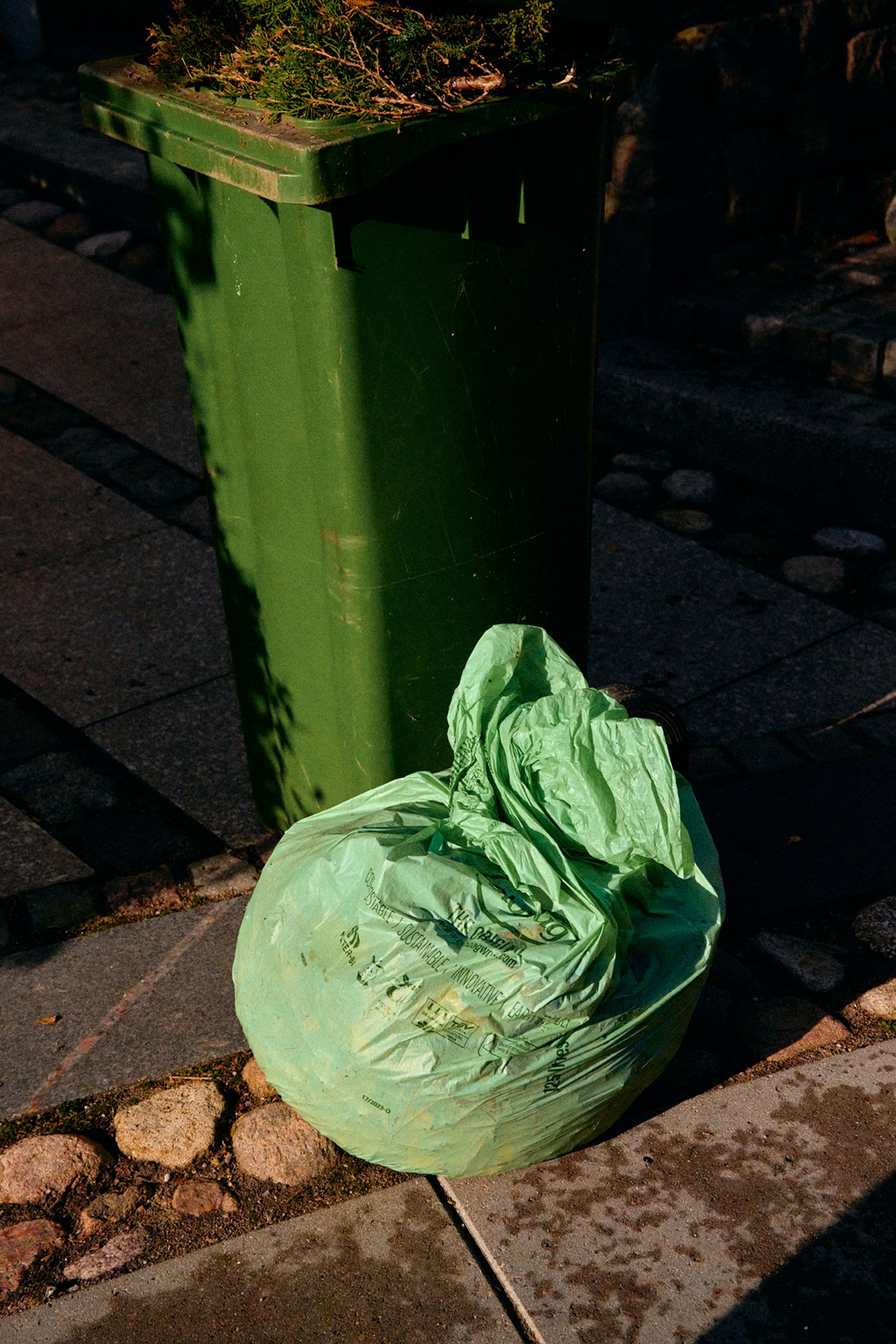
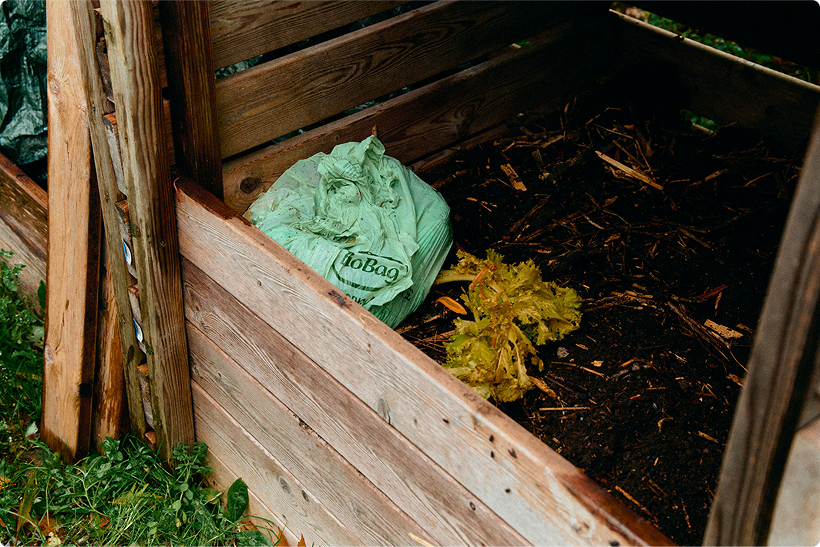
Food-waste collection is one area where the choice of bag can affect the quality of the organic-waste stream. When conventional plastic bags are used to collect food waste, plastic fragments may enter the treatment process. If they are not fully removed during pre-treatment, residues can potentially remain in compost or digestate that is later applied to agricultural land.

Certified compostable biowaste bags are developed for the collection of organic waste and for treatment under specified biological conditions.

Why certified compostable waste bags can be relevant

Certified compostable bags are assessed for specific composting environments. EN 13432 sets requirements for packaging recoverable through industrial composting and biodegradation, while certification schemes such as OK compost INDUSTRIAL provide independent verification against the applicable requirements.

Most Biobag waste bags are also certified according to OK compost HOME, which applies to products assessed under home-composting conditions. The certification applicable to a specific Biobag product can be found on the relevant product page. Learn more about the differences between industrial and home composting in our guide compostable certifications explained.

Certification does not mean that a product should be discarded in nature. It documents how the product performs under the conditions covered by the relevant certification.

Prevention is key to avoiding microplastics in agricultural soil

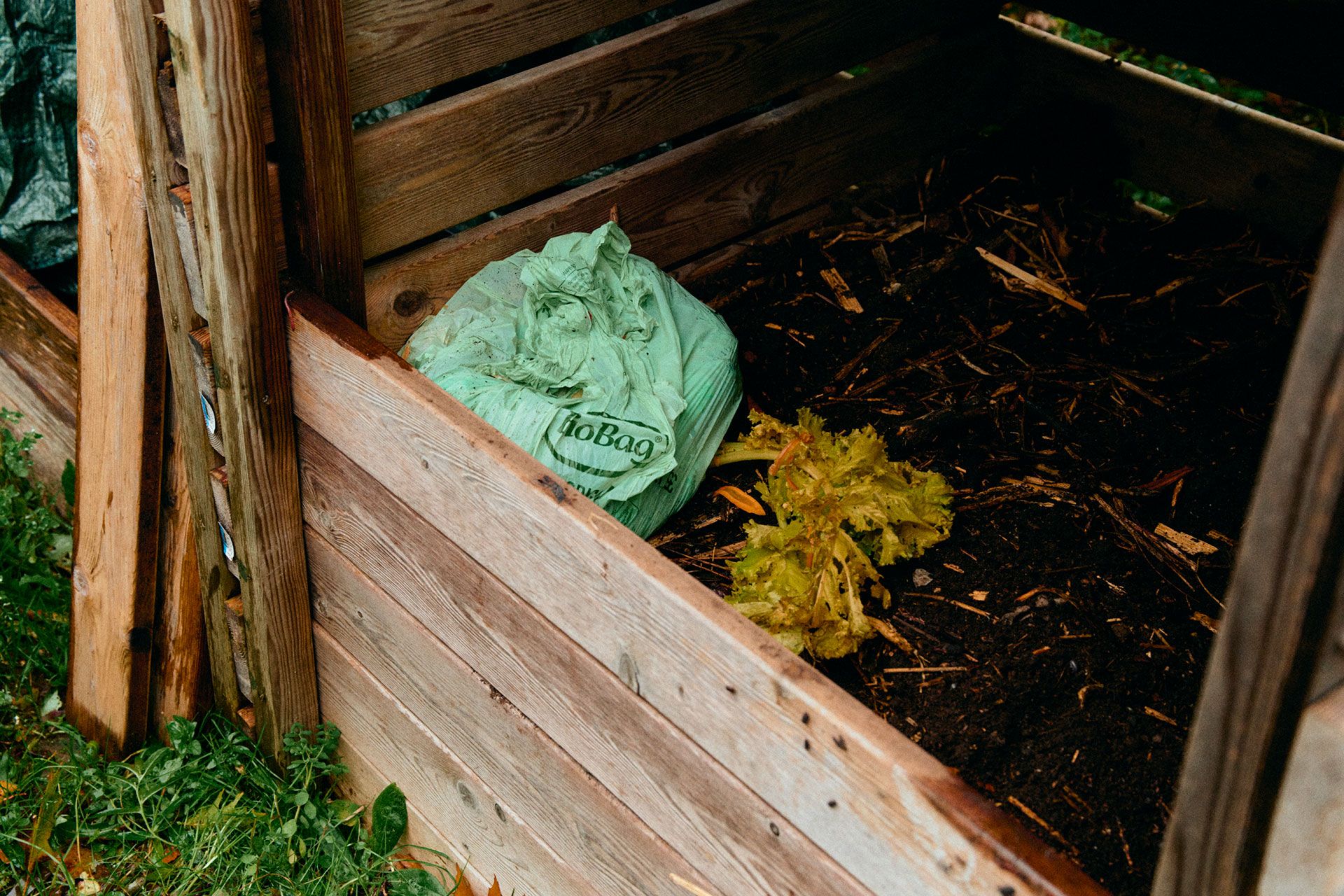
Where certified compostable waste bags are accepted and effectively treated within the local organic-waste system, they can help reduce the risk of conventional plastic bag fragments entering compost or digestate.

Their use should form part of a broader approach that includes reducing unnecessary plastic use, sorting organic waste correctly and preventing non-compostable plastics from entering biological waste streams.

Certified compostable bags are not appropriate for every plastic application. Their role is most relevant where a product is used together with organic waste and enters a compatible collection and treatment process.

From cleanup to prevention

Microplastics in agricultural soils may be less visible than plastic pollution in rivers and oceans, but the available evidence indicates that they represent a growing and potentially long-lasting challenge. Because removing dispersed microplastics from soil is extremely difficult, prevention is essential. Protecting agricultural soil starts with careful waste management and preventing persistent plastic from entering biological cycles in the first place.
Share this article:
Understand the certifications behind the products

Compostability certifications cover specific treatment conditions. Learn what the different certification marks mean before choosing a product for your application and local waste system.

Certifications
Biobag Inspiration

Stories, tools, and ideas to help you make an impact.

Discover inspiring stories, expert advice, and practical tools to help you make sustainable choices, from composting smarter to supporting the circular economy. Our articles show where compostable solutions can make sense and how to build better habits at home, at work, or across entire communities.

Biogas and compost: different roles in the same system

Biogas and compost: different roles in the same system

Organic waste is often used to produce energy. But it also plays a role in maintaining soil health. Understanding how these two outcomes differ is key to making better use of organic resources.

Composting & Soil HealthEnvironment & ClimateEveryone & EverywhereArticle
Organic waste: an environmental threat or the best solution ever?

Organic waste: an environmental threat or the best solution ever?

Surprisingly, organic waste like left-over food, vegetable skins, fruit peels, etc. is one of the top-5 threats to global warming.

Composting & Soil HealthSustainability & ImpactEveryone & EverywhereMunicipalities & Public ProgrammesFood Service & HospitalityArticle
Soil Alert

Soil Alert

In the EU alone, 60-70% of our farmland is considered to be unhealthy. We need healthy farmland to be able to grow crops, fruits, and vegetables to feed the human population.

Composting & Soil HealthEnvironment & ClimateMunicipalities & Public ProgrammesEveryone & EverywhereArticle
Nine reasons to choose Biobags

Nine reasons to choose Biobags

Organic waste and left-over foods make up more than 44% of global waste each year, adding up to almost 1 billion tons.

Sustainability & ImpactComposting & Soil HealthEveryone & EverywhereCommercial Business & InstitutionsMunicipalities & Public ProgrammesRetailers & GroceryArticle
The importance of good soil health

The importance of good soil health

Much of European farmland is sadly no longer suitable, or even able, to grow crops for human consumption.

Composting & Soil HealthEnvironment & ClimateEveryone & EverywhereFarmers & AgricultureArticle
Will compostable bioplastic be part of the EU's soil strategy?

Will compostable bioplastic be part of the EU's soil strategy?

Soil underpins our food systems and biodiversity, yet 60–70% in the EU is unhealthy. Each year a billion tons erode, costing agriculture about €1.25 billion.

Policy & RegulationsComposting & Soil HealthMunicipalities & Public ProgrammesFarmers & AgricultureCommercial Business & InstitutionsArticle
Microplastics are everywhere - but what are the consequences?

Microplastics are everywhere - but what are the consequences?

Microplastics are increasingly found in nature, and while their full impact is still unclear, they are seen as one of the biggest environmental challenges for humans and the planet.

Environment & ClimateSustainability & ImpactEveryone & EverywhereMunicipalities & Public ProgrammesArticle
Life depends on healthy soil

Life depends on healthy soil

Experts come with an interesting message about certified compostable waste bags that contradicts previous information!

Composting & Soil HealthSustainability & ImpactFarmers & AgricultureMunicipalities & Public ProgrammesEveryone & EverywhereArticle
Biobag Ireland UK is now certified by Cré for use in Irish food waste bins.

Biobag Ireland UK is now certified by Cré for use in Irish food waste bins.

Biobag Ireland UK is the first retail range of compostable bags certified for use in Irish food waste (brown) bins. Awarded by Cré IRELAND, this certification is the only Irish scheme providing independent assessment of compostable products.

Sustainability & ImpactComposting & Soil HealthEveryone & EverywhereMunicipalities & Public ProgrammesCommercial Business & InstitutionsRetailers & GroceryFood Service & HospitalityArticle
The role of bioplastic in a circular economy

The role of bioplastic in a circular economy

Biobags are made of Mater-Bi, a compostable material from Novamont, designed to move organic waste from landfills and incineration to biological decomposition, creating compost to enrich soil.

Composting & Soil HealthSustainability & ImpactMunicipalities & Public ProgrammesFarmers & AgricultureEveryone & EverywhereArticle
Study confirms Biobags disappear in natural environments

Study confirms Biobags disappear in natural environments

The results of a two year study in the USA have confirmed biodegradable plastic alternatives like Biobags help prevent plastic pollution.

Sustainability & ImpactEnvironment & ClimateEveryone & EverywhereCommercial Business & InstitutionsFood Service & HospitalityRetailers & GroceryArticle
Microorganisms biodegrade biodegradable plastics

Microorganisms biodegrade biodegradable plastics

An ETH Zurich and EAWAG study shows microorganisms can fully break down biodegradable plastics into natural components.

Sustainability & ImpactComposting & Soil HealthFarmers & AgricultureMunicipalities & Public ProgrammesCommercial Business & InstitutionsEveryone & EverywhereArticle
The ultimate guide to home composting: turn waste into garden gold!

The ultimate guide to home composting: turn waste into garden gold!

Composting is an eco-friendly way to turn organic waste into nutrient-rich soil for gardening and landscaping. Here’s how to start your own compost pile and understand the science behind it.

Composting & Soil HealthEnvironment & ClimateEveryone & EverywhereArticle

Turn inspiration into action

Our compostable solutions help transform organic waste into renewable energy and nutrient-rich compost to grow new life.

Explore Our Compostable Range
biobag

Get in touch

We will be happy to hear from you, so please write if you have questions about our products, want to meet one of our salespeople or you just have a great idea for a new product. Fill out the form and we will get back to you shortly.

I consent that you store my information and reach out to me in accordance with your Privacy Policy.