Each month, we will highlight community heroes that are making a difference in their communities and working to make their local environments cleaner and healthier.
This month, we are taking a look at Envirowagg in CO!

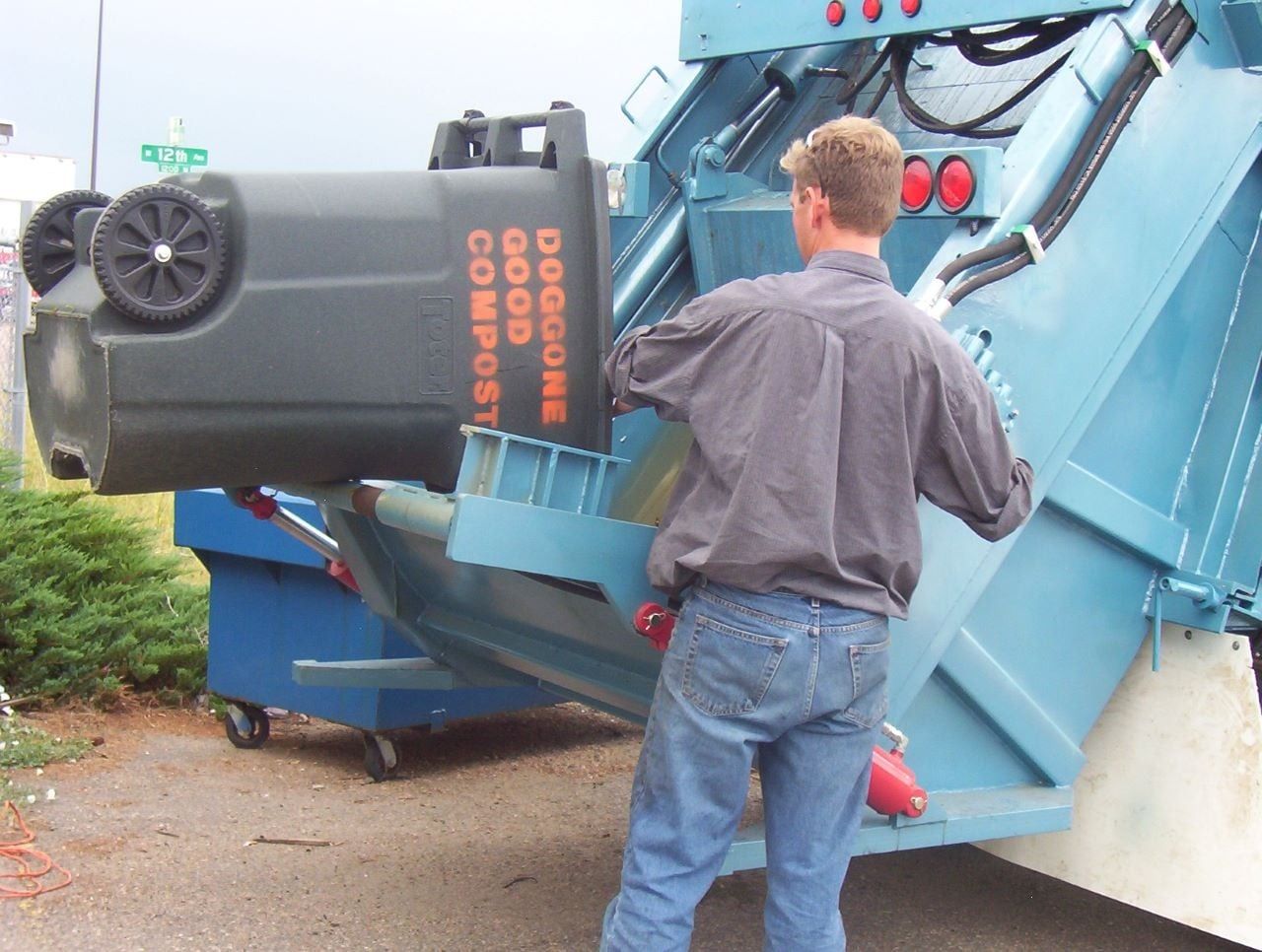
Envirowagg is a composting service based in Colorado and over the years, EnviroWagg and its partners have explored ways to to effectively and efficiently transport, process dog waste and test the finished compost for safety and plant nutrients. Biobag Associate spoke to Rose Seemann with EnviroWagg about the organization. Their interview is transcribed below.
What led you to start your composting operation?
U.S. dogs and cats produce around 180 million tons of waste per year. That amounts to 159 football fields 10 feet deep! Each year! (see infographic) That’s 12% of the U.S. residential waste stream could be returned to the soil or transformed to energy. But it’s overlooked by policy-makers. EPWN brings together people sustainably managing pet waste with others heading in that direction.
The Enviro Pet Waste Network is a nonprofit that connects people around the world to share information and experiences of eco-friendly programs to manage pet waste. The organization aims to help create a more sustainable future by repurposing pet poop and litter into a useful soil enhancer. The result is organics circularity – keeping pet waste out plastic bags and landfills and sending it back to nature.
Pet waste is everywhere, but it stays under the radar until it morphs into a public nuisance. Abandoned dog poop spoils a hiking trail, fouls a sidewalk or contaminates a waterway. Trashed pet waste fills a dwindling number of landfills and adds methane to the earth’s thinning atmosphere.
Regulatory agencies don’t measure waste as a unique waste stream. Few communities and want to deal with it in a meaningful way. Finding someone to process it with other organics is close to impossible. But there’s a great deal of it and the amount is increasing as the pet population continues to grow.
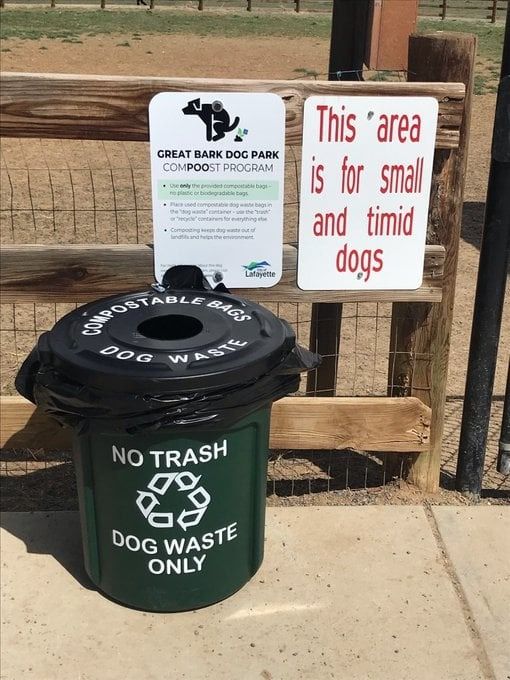
Who do you serve and how can people get in touch with you if they want to start composting?
EPWN serves people worldwide with resources that can help them keep pet poop in the loop. To learn more about do-it-yourself pet waste composting and advocacy for community composting, visit https://epwn.org.
Few communities that do waste assessments consider pet waste in a separate category. But two waste audits completed by the City of Airdrie, north of Calgary, Alberta, Canada consistently found that 12% of what is in their residential waste is pet waste (https://www.airdrietoday.com/local-news/pet-waste-allowed-in-green-bins-1420309). This aligns with an estimate by Kirk Symonds, team lead-education and program delivery with HRM Solid Waste Resources in Halifax, Nova Scotia, Canada, who estimated that pet waste represents eight to 12% of the weight of all residential waste headed to the landfill (https://www.halifaxexaminer.ca/environment/oh-crap-the-scoop-on-poop/).
Simply doing the math also bears out this data. Based on quantity, pet waste would rank between textiles and wood on the EPW’s municipal waste chart (https://epwn.org/information/percentage-of-pet-waste-vs-other-trash/)...if it were there at all. If we want to work out way toward net zero waste, this 12% is one piece of the puzzle that needs to be recognized and fit into the sustainability picture.
How much organic material do you typically take in on a weekly basis?
What are the environmental benefits of pet waste composting or any other interesting facts? Around half of pet waste goes to landfills with comingled plastic. There it emits methane – a potent greenhouse gas – while slowly decomposing. In the U.S. landfill accounts for more than 17% of all methane emissions. Abandoned dog waste can also do serious damage to waterways, hiking trails, beaches and parks. Diverting pet waste is one piece of a huge eco puzzle that needs to be addressed if we want to achieve zero waste.
Most people don’t spend a lot of time thinking about the impact of their pet’s poop on the environment – and for good reason. You pull out a plastic bag, pick up after your dog and toss it in the nearest trash can. Or you tidy up kitty’s litterbox, bag it and drop it in with the household garbage. Seems to be just a little bit here, a little bit there. Nothing to be concerned about – right?
But when you add it up, each dog produces 274 lb. (124 kg.) of poop per year and each cat contributes around 110 lb. (50 kg.) of waste per year. In the U.S. alone, 83 million dogs produce 11 million tons (10 million tonnes) of poop a year. That’s enough to fill 109 football fields – including end zones – 10 feet deep in dog doo.Factor in 5.4 million tons (4.9 million tonnes) of waste from 96 million cats and you’ve got a sizeable, largely overlooked, chunk of disposable material.
Feel free to add any additional information about your operation as you see fit.
EPWN kicked off in 2021 and we already have starter groups in the U.S. and Australia.
The big news here: a group of organizers is starting a new nonprofit for pet waste recycling!
The Enviro Pet Waste Network is applying for status as a Colorado nonprofit and for Federal designation as a 501 c3 nonprofit. EPWN will help people worldwide who want to help create a more sustainable future by recycling pet waste, litter and bedding. Organic materials take many years to even partially degrade in landfills, all the while emitting methane.
Mission
Connecting people around the world to share information and experiences of eco-friendly programs to manage pet waste
Goals
- More communities adopting sustainable pet waste disposal practices
- Jurisdictions moving toward systems that merge this waste stream into organic recycling operations
- Provide data to help move local projects forward
In September 2021, EPWN hit the ground running, gathering and incorporating survey data from potential participants and rolling out a website (https://epwn.org) as an immediate online resource. Among the offerings are research findings, advice for advocacy and diversion options. The group has also hosted webinars covering a variety of techniques currently being used for sustainable pet waste management. And there are many more innovations approaches to be explored, including showcasing Canadian cities and towns that routinely accept pet poop in residential organic recycling bins.
EPWN’s next scheduled free webinar is September 13, 2022, when guest presenter Ruslan Zaerko of BenFe Ltd., Moscow, Russia, describes his experiment using a customized biodigestion unit to produce fertilizer from dog manure. Certified tests of finished products show nitrogen-phosphorus-potassium contents as well as pathogen and heavy metal levels. Tested on switchgrass, the fertilizer had a positive effect on grown and water retention. Register at https://www.eventbrite.com/e/experiment-turning-dog-poop-into-fertilizer-tickets-391907203997.
Check out this five-minute interview https://www.youtube.com/watch?v=IhmrRtb0hHI to find out more about EPWN’s vision and next steps. If you need assistance organizing a program or have information to share contact EPWN at https://epwn.org/contact-epwn/ to join the growing network of participants and advisors.

.jpg)